
corto.alto on touring, new music, and studio time with Hiatus Kaiyote
- Daniel Burdon
- Dec 11, 2025
- 16 min read

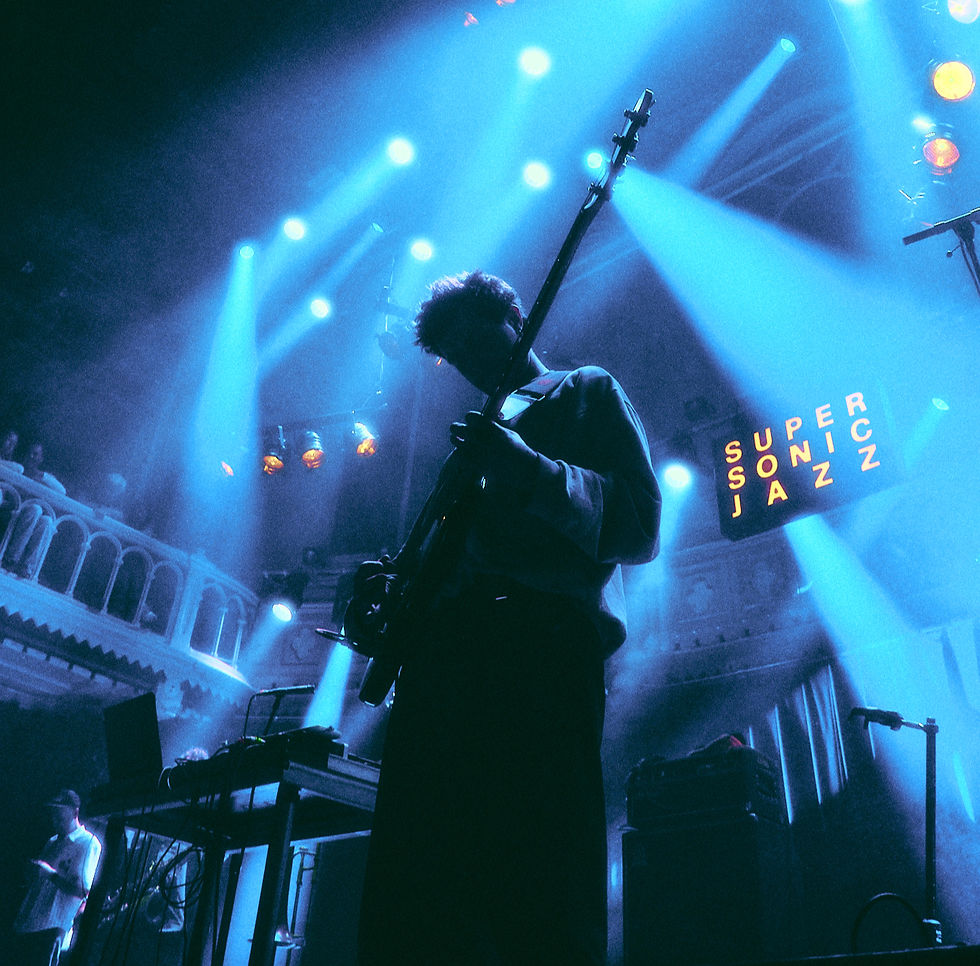
corto.alto is the 'future jazz' project of Glasgow based producer & instrumentalist Liam Shortall. Originally from Dumfries, Liam has taken corto.alto to festivals like Glastonbury and Love Supreme, headlined the Barrowland Ballroom and KOKO, and been nominated for the Mercury Prize. We spoke to Liam shortly after he returned from his tour of Australia, and our conversation covered his current & dream collaborators, favourite stages to play, instrumental choices, and so much more.
DB: Who are you and what do you do?
Liam: My name is Liam. I am a music producer, musician, instrumentalist. I run a project called corto.alto, which is my main thing - almost my only thing now. I used to play in a lot of other bands and as a session musician. I’m a trombone player so I used to play a lot of jazz, dub, classical music, loads of different styles. Now I primarily just do corto.alto which is my outlet for my own music and it’s kind of future jazz, so everything’s grounded in jazz but it’s very much forward-facing. I love electronic music, it’s got a lot of Latin influence, hip hop, soul, funk, drum and bass, jungle, EDM. We tour all year. We’ve done, fucking hell, how many shows this year - I think about 70 shows. I’m just starting to make another album so that’s what I’m up to at the moment.
DB: You’re working on the new album. Can you tell us anything about that? Who’s influencing you?
Liam: It’s in very early stages. I’m not even sure if it’s gonna be an album yet. I’m just writing. After we’ve been on tour, we’ve developed some new stuff. We’ve been in the studio this week for the first time in a long time ‘cause we play a lot of festivals, and we toured all of September, October, November. So just new music and seeing what happens in the studio. I don’t even know what the music sounds like yet - I’m just starting to work on new stuff. That should be, hopefully, out in the next few years.
DB: You’re constantly touring. What’s your favourite place in the world to gig?
Liam: I would definitely say Glasgow. We played Barrowland Ballroom at the start of this year, and that was definitely one of my favourite shows we’ve done. Every time we go to Dublin it, it’s really fun. We just came back from Australia on tour, and all those shows were really great. The crowds were super warm. We’ve toured a lot around Europe and played some amazing festivals in Italy and Germany and Czech Republic and Poland. I’m amazed that people come to spend their money and spend their time buying tickets to see me. It’s still such an honour to be able to do that. But, yeah, if I had to say an answer to that question it would definitely be Glasgow. The hometown show, all your friends, all your family, in a legendary venue like the Barrowland Ballroom, that was definitely one of my favourites. But we also did Glastonbury this year, on the West Holts Stage, that was amazing. We did a really fun show in Stockholm last year - maybe that’s more of a rogue one.
DB: As you said, you played at the Barras in January as part of Celtic Connections. That seems like one of those stages that every musician dreams of playing on when they’re coming out of Glasgow. What did it mean for you to be up there?
Liam: It was booked for a while and then time flies and it just happens – it’s almost a year ago now. I’m from Dumfries and I moved here when I was 16, so I feel Glaswegian. Growing up as a musician in Glasgow, you kind of dream of playing there, in some sort of way. I’d played it before with a couple of other bands but to play it with my own music which doesn't have a vocalist and isn’t very accessible – well, it’s not inaccessible, but it’s jazz, it’s not pop music. I never really thought we would play that show on that stage cause … I didn't think it had that much reach, but obviously it does.
DB: You mentioned as well, you’re just back from touring Australia. You’ve played all over, in places with different cultures, different communities, different ways of accessing music. How does performing that far away from home differ for you?
Liam: I suppose headline shows are always the same cause people are buying tickets to come see you and they kind of know what to expect. They’ve went out of their way to buy a ticket and come and see us play. But playing festivals is always interesting cause obviously when we play festivals in the UK like Cross the Tracks, or We Out Here, or Love Supreme or Glastonbury, a lot of people know us and have seen us before at other festivals. But going to Australia and playing festivals there was really interesting ‘cause you have this rare opportunity to go on stage, and no one knows who you are, and you get to introduce yourself for the first time to a whole new audience.
I always find that super exciting - and quite daunting. You know, it’s not for everyone, the kind of music I make, and I understand that and don’t really care about that but I just to just try and win people. I think the best gigs that I’ve seen is when the artist makes you feel like they’re no better than you or they don’t think there’s any difference between the people on stage and the people in the audience. I think that’s always the kind of vibe I try to get. If you make mistakes- we loop live and we use a lot of technology live so sometimes it goes wrong. I kind of like them moments, just admitting that you’ve made a mistake and start again - just showing the audience that we’re all insecure as much as anyone else. It’s always fun to do that in, in new places, I think people can really relate to that.
What’s been really nice to see with my music, when we played the Barrowlands or when we played our headline show in London a couple months ago at KOKO, that was a big, big stage for us, and it’s nice to look out and there’s people from all ages, all races, all backgrounds. I think that’s what music should be and that I’m really happy that when I look out at our gigs it’s a very diverse audience. That feels like it’s got longevity - I’ve got people that come up to me and they’re in their 80s and they’ve brought their grandkids with them, and then people that have brought their grandparents, and it’s just quite mad to the broadness of reach that music can have.
Even going to other people’s shows - you spoke to Bemz, I’ve been to see him and it’s always cool to see the range of audience he gets as well. I think that’s what’s great about making music in Scotland is people are up for it and there’s not like too much of a clique within certain genres of ‘oh you can’t go to this because you’re a 70 year old Scottish man’ or something like that. Generally, gigs in Scotland the audience seem to be a representation of all of the people in Scotland, and that’s always nice to see.
DB: Last year was a huge year for you - you got nominated for a Mercury Prize. You were one of the only two Scottish acts that got nominated - you and Barry Can't Swim. You mentioned getting recognition from normal people – grandkids, granddads. What does recognition from a body like the Mercury Prize mean to you?
Liam: It was definitely a massive shock. I think as soon as you start making music and you hear about stuff like this, you don’t really think about it because it just seems so far away. Especially when you make music like jazz, or kind of jazz adjacent stuff, you kind of concede that those opportunities aren't going to be available to you – that’s just the bed you’ve made with the genre you’re going into. So, it was a massive shock - in the back of my mind it was a dream, at some point in my career to get a nomination like that.
For it to happen on my debut album was definitely not expected and a massive shock. Quite a big learning curve as well – my music’s obviously mostly instrumental, and I’m now the face of it, but I always feel like my project is the music first and then the personality, or whatever, second. I think a lot of pop artists are more front facing. So doing all the interviews and all the attention that came from it was quite a big learning curve, and quite difficult at times. Just to receive that nomination and to be with those other nine artists, like Charli XCX and all these mad huge albums that came out that year. It was such an honour, it was really cool.
DB: I want to chat a little bit about your creative process as well. In 2024 you put out 30/108, where you whittled down 108 demos into 30 full songs over a couple of months. How did you decide that you wanted to engage in that process versus a traditional project, and how much more challenging was it than making a project in the way that you would normally?
Liam: I’m 29 and I’m starting to give less of a fuck about what other people think, but when I was younger, I was always really scared to share my music. I think it’s a very common thing with young artists - nothing’s ever finished and it feels like you’ll just sit on this music, and it’ll never see the light of day. I had this folder of 108 demos, and I was looking at it and thinking ‘this doesn't really feel like the next album, but I don’t really want to let this go to waste’. This music that people have recorded on and I was really proud of, but I didn't really feel like it was like an album - Bad with Names felt like more of a cohesive thing. I just decided randomly, I want to release 30 of these, I want to finish them.
Usually with an album campaign you’ll do three pre-album singles, and you’ll release them every six weeks or whatever. With this I wanted to release a single every day, so each track was equally weighted in terms of how I was presenting it, so nothing stood out. It was just 30 tracks that I really wanted to share. It was labour intensive - each track had two videos for social media; there was a lot of moving parts. Last year was our busiest year, we did a hundred and something shows. During that time, I’m in the van or the green room, trying to finish mixes - I mixed and mastered everything as well as writing and recording it. It was a big challenge, but I think what I got from it was - going into the next project I’m going to do - I didn't really have the luxury of having time to make decisions. I think that was a really positive thing in the end, ‘cause it was basically every decision I had to make - whether it’s a snare sound or a chord choice - I didn't have any time to ponder over that. I just had to be really decisive - everything was just constant momentum.
Going into the next project I’ve learned that usually the first thing that sounds good is the best thing for the track. So many times I make a production or composition decision within the music and be unsure about it. I’ll go back to it over three weeks or a month and then eventually just go back to the original idea. I think I’ve learned that the reason you find something good is because that’s what is supposed to be in the track. Really, really rarely do I use the second thing I find. The whole process was really good for me. There was no money behind the promotion of it. It was very much a random project - I didn't want to do it for audience growth or for these things that with traditional albums you’d hope for. We didn't put any money into press or anything like that. The whole thing was really music focused and I felt like doing it cause I didn't think anyone had done a single a day for 30 days before. It was fun - I definitely bit off more than I could chew at points but I’m really glad we did it.
DB: I want to chat about a couple of people that you’ve played with before who have played with you, who are doing really well too. Fergus McCreadie obviously, he’s played keys for you, he’s recently been working with Spike Lee, and Roan Anderson, who’s drummed for you in the studio before, won the BBC Radio Scotland Young Jazz Musician 2025. How does it feel for you to work with such a successful cohort of young musicians, championing them and seeing their success?
Liam: I was in Melbourne for two weeks last month and got to check out the scene there and meet people - and I feel like Glasgow is on par with anywhere in the world. I’ve never felt like anywhere’s beaten Glasgow in terms of the musicianship. The people are really hardworking here. The thing I’d say about both Fergus and Roan - they’re at different stages in their career, Fergus is a bit older - they’re both amazing people and really, really genuine guys and have no ego, they’re just so open and so warm and so cool, and they just both love making music. I think that’s kind of what the standard is in Glasgow. It’s great that there’s people like that to champion for the next generation of people as well. They inspire me definitely. It’s such an honour to make music in Scotland. You don’t really appreciate it until you go away and spend some time in other places, and you miss the warmth and the humility people have here.
I think that’s what’s awesome about music in Scotland is we don’t have the kind of institutions and the newspapers and radio and magazines and labels and festivals and all these things that hold up a music scene. I think that frees artists up to not have this incentive to fit into certain boxes. Me and Fergus are both in the jazz scene but if you listen to our albums, you’ll be like ‘these are just completely different genres’. I think you have more self-expression in a place where there’s less paths that have been already. Everyone’s just making music cause they like it, rather than making it cause it’s cool -, cause at the start, it’s never cool. Playing trombone and jazz, all that stuff, when you’re a kid, you’re not the coolest person ever. I love making music in Scotland. I don’t think I’ll ever leave.
DB: You’ve transitioned from playing mainly the trombone to a bit more of a focus on bass guitar at the moment. What’s the thinking behind that?
Liam: A lot of it was logistical and economic really. We’ve had to be able to tour with just a trio - my live band used to be six, seven people. We had to make a decision a couple of years ago that forced me to play more bass. I’ve kind of fallen into being a bass player which is I really enjoy. I think I was always known as a trombone player and it was my whole identity and job – I’m a trombone player in the Scottish National Jazz Orchestra, I’ve been a trombone player since I was a kid but no one knows me as a bass player. I think that frees me up, I have this defence of if I’m shite, it’s not the end of the world." I think trombone I have this weird attachment, where if I play a bad gig, I’m like, "Oh fuck”, my whole identity is in crisis.
With bass I feel a lot more free and I’ve kind of rediscovered the feeling when you start playing music, and you don’t really know the mistakes you’re making, and you just love it, and you’re not judging yourself too much. I’ve really refound the joy of playing music through it again. I now kind of only play trombone when I’ve got a tour coming up that I need to get in shape for or I’m doing something with another person’s band. I’ve never really had a deep passion for playing an instrument. I’ve always had like a deep passion for making records and making a live show - I really love music, but I don’t really see myself as an instrumentalist. I more feel like I’m a producer - I like making music and I use instruments to facilitate that. When I want to make an album, I don’t really think about which instruments to use - I’m just trying to make music.
DB: You mentioned earlier your influences genre-wise encompassing so much. Have you got any specific artists that have particularly influenced your musical style?
Liam: Moses Yoofee is a really really good friend of mine and we’re going in similar directions. That’s someone I feel I’m closest to in terms of genre and he really inspires me. We work together a lot and steal stuff from each other. I would say Hiatus Kaiyote are a huge influence. I was in the studio with them last week in in Melbourne and that was literally the craziest thing in my life. Their first album came out when I was 15, and then Choose Your Weapon, their second album, was the sound of my adolescence, I listened to that album a million times. I love soul music - Sam Cooke, early James Brown, soul and funk. I love Knxwledge, the Hip Hop producer, he’s a massive influence. Monte Booker is a big influence on me production wise. Hundreds of people. I love Anderson .Paak.
I think honestly the biggest influences on me are my friends. Graham Costello is my drummer and I’ve been recording with him the last three days and it’s just absolutely ridiculous every time he plays the drums, and I just get to put that on my album., I think a big part of being a producer and being someone who runs a project is being more of a curator. Getting people involved who you think will be good. I’m just really lucky that I’m surrounded by really talented people and people that are up for putting their talents on my music. It’s weird, cause then you get a lot of credit, and it feels a bit unfair, but all you can do is distribute that credit where you can. Massive inspirations are the people I play with - a lot of other things as well, but I think if we’re just talking music, definitely the people I work with and play with.
DB: Anything more you can tell me about being in the studio with Hiatus Kaiyote?
Liam: I don’t think it’s a secret. We were just working - I was in Melbourne and I had some days off, and we’re part of the same label family, so the label just set it up and we had four hours and we made three demos. I don’t know what they’re gonna be used for, but it was just fun - the whole time I was trying not to get too excited or tell them that I love them. It was just so crazy to be in the room with them. It wasn't like we were making music for anything specific - it was just getting together and making tunes. It was super fun.
DB: Do you think we’ll hear any of those songs?
Liam: I don’t know. Maybe. It just gets added to the pile of fucking random music that I have, that hopefully one day will get formed into an album. I hope so. I think my dream would be to do a collaborative project with someone like that. It was really nice to get to meet them, cause they’ve just been the biggest inspiration. I really feel like that album, Choose Your Weapon, if that didn't exist, I would probably be doing something else. I don’t think I would have ended up staying playing trombone, because that was what got me into production. That was the first time I’d heard music that was like ‘what the fuck is this? How do you make this?’ It was so interesting to me, there was nothing I’d heard before that felt that inspiring. I owe them a lot. I didn't say this to them. Maybe they’ll read this.
DB: You might have just answered this question, but my next question is: who is your dream collaboration music wise?
Liam: Apart from them, I’d love to do something with Anderson .Paak. I’ve always been such a huge fan. There are so many good Scottish artists that I’ve talked about doing stuff with but like never just found the time. Jacob Alon – they’re such an incredible artist, I’ve seen them play a bunch of times. Pippa Blundell – she’s amazing. She’s one of my best mates and we’ve never written any music together. I love Vlure. I love DOSS – they’re a punk band from Glasgow; I listen to them all the time when I’m in the car. They’re incredible - I know all the guys and I definitely could get in the studio if I asked them but it's hard. Everyone’s so busy. This next project, I don’t think it’s gonna have too many features, but the project after that, I would love to do a whole Scottish album, where it’s showcasing Scottish artists cause there are so many good ones that I’ve always wanted to work with and just never found the chance to do it.
DB: You mentioned a couple names there. Who else in Scottish music is exciting you right now?
Liam: Kai Reesu just won the SAY Award, and all those guys are close friends of mine. They’re incredible. I really love their stuff and I’m really excited for their next album. There are so many people. Brooke Combe is incredible. I really like Sam Gellaitry. He’s such an insane producer. When I found out he was from Stirling, I was just like ‘what the fuck man?’ I used to listen to a lot of SoundCloud beats, and I was never producing music, but I was always a fan of that world. I listened to Sam’s music quite a lot when I was a kid and then maybe 10 years later found out he was from Scotland. It just shows how diverse the music scene is. There are legendary artists from all corners of genres.
DB: What’s next for corto.alto? What should we look out from you in the next couple of months?
Liam: I’m really excited to be home in Govanhill and have the time to make music. We’ll be touring a lot next year, but I’ve got two or three months that are quite chill now. So, I’m really excited to see how that music forms and get some more stuff out. Then we’ll be doing shit loads of shows again, I’m sure. If anyone hasn't seen us play live, come. The next Scottish thing we’re doing is the Kelburn Jazz Weekender in May. We’re headlining that with Gilles Peterson. That’s going to be mega fun. I think Kelburn’s my favourite place to play music in the world. I’ve been going there since I was about 17 as a punter, and then played loads of times with different bands, and I feel like it’s my spiritual home. A lot of my first experiences have been there [laughs]. I just love that place man. It’s such an honour - we’ve headlined some jazz festivals but it’s the first field festival that we’ve headlined it so it’s quite exciting, quite mental. And Gilles is a legend man; he’s been so kind and so supportive of my music so that’ll be cool.
Picture by Hannah Bruynzeel


Comments